

Introduction
Mobile diesel mechanic Derrimut services provide a practical way to diagnose, repair, and maintain diesel-powered vehicles without always requiring a trip to a traditional workshop. Instead of taking a truck, van, or commercial diesel vehicle to a fixed location, a mobile mechanic can travel to a suitable roadside, workplace, depot, yard, or other accessible location.
This guide explains what a Mobile diesel mechanic Derrimut does, when you should call one, which diesel problems can be handled on-site, the benefits and limitations of mobile repairs, and how to choose a reliable service in Derrimut. It also covers preventive maintenance, common diesel warning signs, and practical steps fleet operators can take to reduce unexpected downtime.
For businesses operating commercial vehicles, getting a mechanical problem assessed quickly can be especially important. A minor warning sign can sometimes develop into a more serious engine, fuel, electrical, cooling, or driveline problem if it is ignored.
What Is a Mobile Diesel Mechanic Derrimut?
A Mobile diesel mechanic Derrimut is a qualified vehicle repair professional who travels to the vehicle rather than requiring the vehicle to be brought into a workshop. Depending on the mechanic’s equipment, experience, and the nature of the fault, many diagnostic, servicing, and repair tasks can be completed at the vehicle’s location.
Mobile diesel mechanics commonly work with diesel trucks, commercial vehicles, vans, machinery, and other heavy-duty equipment. Their services can range from computer diagnostics and routine servicing to troubleshooting starting problems, fuel-system faults, cooling-system issues, and selected mechanical repairs.
The major difference between a mobile mechanic and a conventional workshop is the location of the service. A workshop brings the vehicle to the mechanic, while a mobile service brings the mechanic and equipment to the vehicle.
When Should You Call a Mobile Diesel Mechanic Derrimut?
You should consider calling a Mobile diesel mechanic Derrimut when your diesel vehicle develops a mechanical or electrical problem that makes travelling to a workshop difficult, unsafe, or impractical.
Common situations include:
- The diesel engine will not start.
- The vehicle suddenly loses power.
- The engine overheats.
- Warning lights appear on the dashboard.
- The vehicle produces unusual smoke.
- There is a fuel or coolant leak.
- The engine is running roughly.
- The truck develops unusual vibrations or noises.
- The battery or starting system fails.
- A commercial vehicle breaks down at a depot or worksite.
If a vehicle is unsafe to drive, attempting to continue driving can make the problem worse. In such situations, professional assessment should come before moving the vehicle.
7 Key Benefits of a Mobile Diesel Mechanic Derrimut
1. Convenient On-Site Repairs
The biggest advantage of mobile diesel repair is convenience. Instead of arranging transport for a disabled vehicle, the mechanic can travel to the vehicle when the location is accessible and safe.
This can be particularly useful for fleet operators with several vehicles working across different locations. A mechanical issue does not necessarily mean the vehicle must immediately be transported to a workshop.
2. Faster Breakdown Response
A mobile service can help reduce the time between a breakdown and the initial mechanical assessment. Early diagnosis can help determine whether the vehicle needs a simple repair, further testing, or towing to a specialist workshop.
For commercial operators, this can make a significant difference because an unavailable truck may affect deliveries, schedules, drivers, and other vehicles.
However, response times depend on mechanic availability, traffic, location, workload, and the type of breakdown.
3. Reduced Vehicle Downtime
Vehicle downtime can create operational problems, especially when a truck is required for regular deliveries or transport work.
A Mobile diesel mechanic Derrimut service may be able to perform diagnostics, minor repairs, servicing, and selected component replacements without the vehicle travelling to a workshop. When an on-site repair is possible, this can help return the vehicle to service more efficiently.
4. Professional Diesel Diagnostics
Modern diesel engines rely heavily on electronic control systems. A suitable diagnostic scanner can help identify fault codes and provide useful information about engine and vehicle systems.
Diagnostics may be used alongside physical inspection rather than replacing it. A fault code can indicate an area requiring investigation, but it does not automatically prove that a particular component is defective.
A good mechanic should combine diagnostic information with symptoms, visual checks, testing, and manufacturer specifications.
5. Support for Commercial Fleets
Fleet operators can benefit from mobile mechanical services because multiple vehicles may operate from different locations.
A mobile mechanic can potentially provide services such as:
- Preventive maintenance checks
- Diesel engine diagnostics
- Battery and starting-system checks
- Cooling-system inspections
- Brake-related inspections and repairs where appropriate
- Electrical troubleshooting
- Fluid and filter servicing
- Selected fuel-system repairs
- Breakdown assistance
- General mechanical inspections
For larger fleets, maintaining service records can also make it easier to identify recurring faults and plan maintenance.
6. Practical Breakdown Assistance
A truck that will not start at a depot or roadside location can quickly become an operational problem. Mobile diesel repair can provide an initial assessment and, where practical, attempt an on-site repair.
Not every breakdown can be repaired at the roadside. Major engine damage, serious transmission problems, structural damage, or repairs requiring specialist workshop equipment may require towing.
7. Preventive Maintenance at Your Location
Mobile diesel mechanic Derrimut are not only useful during emergencies. They can also support planned maintenance.
Scheduled inspections can help identify issues such as worn belts, leaking hoses, damaged electrical connections, fluid leaks, battery problems, and other developing faults before they become larger problems.
Preventive maintenance should follow the vehicle manufacturer’s service requirements and the operator’s maintenance procedures.
Common Diesel Problems in Commercial Vehicles
Diesel vehicles can experience many different mechanical and electrical problems. Some symptoms are easy to identify, while others require professional diagnostics.
Hard Starting or No-Start Problems
A diesel engine that struggles to start may have a weak battery, starter problem, fuel-delivery issue, electrical fault, sensor problem, or another underlying mechanical issue.
Rather than repeatedly attempting to start the vehicle, it is better to identify the cause. Repeated starting attempts can place additional strain on the battery and starter.
Loss of Engine Power
Sudden or gradual loss of power can be associated with fuel delivery, air intake, turbocharger, exhaust, sensor, electronic control, or other engine-related problems.
A mechanic can inspect the vehicle and use diagnostic equipment where appropriate to narrow down the cause.
Engine Overheating
Overheating should never be ignored. Potential causes include low coolant, leaks, cooling-system problems, radiator issues, thermostat problems, fan faults, or other engine-related conditions.
If the temperature rises abnormally, stopping the vehicle safely and allowing it to cool can be safer than continuing to drive.
Excessive or Unusual Smoke
Diesel exhaust colour and behaviour can provide clues, but smoke alone cannot reliably diagnose a fault.
Persistent abnormal smoke may indicate combustion, fuel, air, oil, turbocharger, or exhaust-related problems. A professional inspection is the appropriate way to determine the cause.
Dashboard Warning Lights
Warning lights should not automatically be ignored because the vehicle still appears to drive normally.
Some faults can affect emissions, engine performance, fuel economy, or vehicle reliability. Diagnostic scanning combined with proper testing can help determine what the warning system is reporting.
What Services Can a Mobile Diesel Mechanic Derrimut Provide?
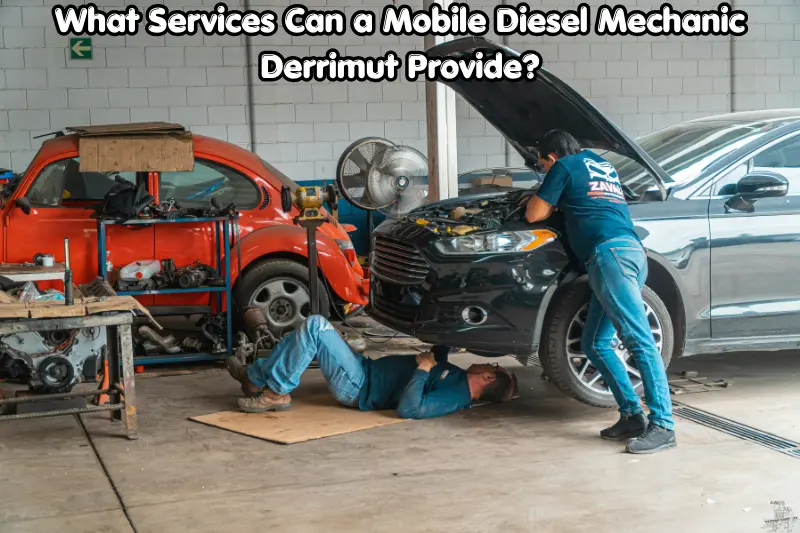
The exact service range varies between providers, but a Mobile diesel mechanic Derrimut may offer several types of support.
Diesel Engine Diagnostics
Electronic diagnostic equipment can help retrieve fault information from compatible vehicle systems. The mechanic can then investigate the relevant components and determine the likely cause.
Diesel Servicing
Routine servicing can include oil and filter replacement, inspection of fluids, belts, hoses, batteries, and other service items according to the vehicle’s maintenance schedule.
Electrical Troubleshooting
Starting failures, charging issues, wiring problems, sensor faults, and battery-related issues can sometimes be investigated and repaired on-site.
Cooling-System Repairs
Cooling-system work may involve checking coolant levels, hoses, leaks, fans, thermostats, radiators, and related components. More extensive repairs may require workshop facilities.
Fuel-System Diagnosis
Diesel fuel problems can affect starting, engine performance, and fuel delivery. Diagnosis may involve checking filters, fuel supply, pressure-related components, injectors, sensors, and other parts depending on the vehicle.
Truck and Heavy Vehicle Repairs
For commercial trucks and heavy vehicles, a Mobile diesel mechanic Derrimut may assist with selected mechanical and electrical repairs. The suitability of on-site repair depends on vehicle type, fault severity, available equipment, and safety conditions.
Mobile Mechanic vs Workshop Mechanic
| Feature | Mobile Diesel Mechanic | Traditional Workshop |
|---|---|---|
| Service location | Vehicle location | Fixed workshop |
| Breakdown assistance | Often available | Usually requires vehicle transport |
| Convenience | High | Vehicle must reach workshop |
| Routine servicing | Often possible | Usually available |
| Major repairs | May be limited | Better suited |
| Diagnostic testing | Often available | Usually available |
| Heavy workshop equipment | Limited by mobile setup | More extensive |
| Best for | On-site faults and selected repairs | Complex and major repairs |
The best option depends on the problem. A mobile mechanic can be ideal for diagnostics, servicing, and suitable on-site repairs, while a workshop may be necessary for major engine, transmission, fabrication, or specialist repairs.
How to Choose the Right Diesel Mechanic in Derrimut
Choosing a mechanic should not be based only on the cheapest quoted price. Reliability, communication, experience, equipment, and the scope of service are also important.
Consider these factors before booking:
- Explain the symptoms clearly. Tell the mechanic what happened, when it started, and whether warning lights appeared.
- Ask about mobile coverage. Confirm that the mechanic services your location and vehicle type.
- Check the service scope. Make sure the provider handles diesel vehicles similar to yours.
- Ask about diagnostics. Modern commercial vehicles may require suitable diagnostic equipment.
- Request an estimate. Ask whether call-out, diagnostic, labour, parts, and additional charges are separate.
- Confirm repair limitations. Some faults cannot safely or practically be repaired on-site.
- Keep maintenance records. Good records make future troubleshooting easier.
What to Do Before the Mechanic Arrives
A little preparation can make the breakdown assessment easier.
If the vehicle is stopped on or near a road, prioritise safety. Move to a safe location only if it is possible to do so without creating additional risk.
Then collect useful information such as:
- Vehicle make and model
- Approximate vehicle age
- Engine type
- Current mileage or operating hours
- Warning lights displayed
- Recent repairs or servicing
- Unusual noises or smells
- Smoke colour or changes
- Whether the vehicle starts
- Whether the fault happened suddenly or gradually
Avoid dismantling engine components or attempting complicated repairs without appropriate knowledge and equipment.
Preventive Diesel Maintenance Tips
Preventive maintenance can reduce the likelihood of unexpected mechanical problems, although it cannot eliminate breakdowns completely.
Follow the manufacturer’s recommended servicing intervals and pay attention to operating conditions. Commercial vehicles used for heavy loads, frequent stops, dusty environments, long-distance work, or demanding applications may require maintenance planning appropriate to those conditions.
Useful habits include:
- Check fluid levels regularly.
- Inspect for visible leaks.
- Monitor dashboard warning lights.
- Check tyres and basic vehicle condition.
- Follow oil and filter service intervals.
- Keep batteries and electrical connections in good condition.
- Record completed repairs and servicing.
- Investigate unusual noises early.
- Do not ignore repeated starting problems.
- Remove unsafe vehicles from operation until faults are corrected.
The National Heavy Vehicle Regulator’s National Heavy Vehicle Inspection Manual provides consistent inspection criteria for heavy vehicles and includes sections covering brakes, steering and suspension, wheels and tyres, engine and driveline systems, lights, and other important components.
Why Maintenance Records Matter
Maintenance records are useful for both individual operators and fleet businesses. They can show when a vehicle was serviced, which components were replaced, and whether a particular problem keeps returning.
For operators working under heavy vehicle safety and compliance requirements, proper maintenance systems can also support better risk management. NHVR guidance recommends appropriate maintenance, fault reporting, timely repairs, and keeping records of faults and maintenance activities.
A simple maintenance record can include the date, vehicle identification, mileage, reported fault, inspection findings, parts replaced, work completed, and next recommended service.
For complete support with commercial vehicles, explore our truck repairs service for mechanical issues, or learn more about mobile truck mechanic services. You can also read our guide to truck servicing to understand how regular maintenance can help keep diesel vehicles reliable and road-ready.
For additional information about heavy vehicle inspection and maintenance requirements in Australia, readers can refer to the National Heavy Vehicle Inspection Manual provided by the National Heavy Vehicle Regulator (NHVR).
Common Mistakes to Avoid
Ignoring Warning Lights
A vehicle may continue operating even when a fault has been detected. Continuing to drive without investigation can allow some problems to become more serious.
Choosing Only by Price
The lowest quote may not provide the best overall value. Consider experience, diagnostic capability, service scope, parts quality, communication, and the likely cause of the problem.
Driving an Unsafe Vehicle
If a truck has a serious brake, steering, tyre, overheating, structural, or other safety-related problem, it should not simply be driven to a workshop to save time.
Skipping Preventive Maintenance
Waiting for a breakdown before servicing a commercial vehicle can create avoidable downtime. Planned inspections can identify developing problems earlier.
Assuming Every Fault Can Be Fixed Roadside
Mobile mechanics have practical limitations. Heavy workshop equipment, specialist tools, major component removal, and extensive repairs may require a workshop.
Frequently Asked Questions
What does a mobile diesel mechanic Derrimut do?
A mobile diesel mechanic travels to the vehicle to provide diagnostics, servicing, troubleshooting, and selected repairs. Depending on the vehicle and fault, services may include engine diagnostics, electrical repairs, starting-system checks, cooling-system work, fuel-system diagnosis, and general diesel maintenance.
Can a mobile diesel mechanic repair a truck at the roadside?
Some truck faults can be diagnosed and repaired at the roadside, but not every problem is suitable for mobile repair. Major engine, transmission, structural, or specialist repairs may require workshop equipment. The mechanic should assess the fault and determine whether an on-site repair is safe and practical.
How often should a diesel truck be serviced?
The correct service interval depends on the vehicle manufacturer’s recommendations, engine, operating conditions, mileage, hours, load, and application. Fleet operators should follow the manufacturer’s schedule and maintain appropriate inspection and maintenance records rather than relying on a single interval for every truck.
What are common signs that a diesel engine needs attention?
Common warning signs include difficult starting, unusual smoke, reduced power, abnormal engine noise, overheating, fluid leaks, poor running, increased fuel consumption, and dashboard warning lights. A single symptom can have multiple causes, so proper diagnosis is important before replacing parts.
Is a mobile diesel mechanic cheaper than a workshop?
Not necessarily. A mobile service may reduce towing or vehicle transport costs and can be convenient for on-site repairs, but call-out and mobile service charges may apply. The overall cost depends on the fault, labour, parts, travel, diagnostic work, and whether the vehicle ultimately needs workshop repairs.
Practical Checklist Before Booking
Before contacting a mobile diesel mechanic Derrimut service, prepare the following information:
- Vehicle make and model
- Engine type
- Vehicle location
- Description of the problem
- Warning lights or fault messages
- Whether the engine starts
- Recent maintenance history
- Any visible leaks
- Unusual sounds or smoke
- Whether the vehicle can be safely moved
Providing accurate information can help the mechanic understand the situation before arriving and bring more appropriate diagnostic equipment or replacement parts.
Conclusion
A mobile diesel mechanic Derrimut service can be a convenient solution when a diesel truck, commercial vehicle, or other diesel-powered vehicle needs diagnosis, servicing, or suitable on-site repairs. The main advantages include convenience, faster assessment, reduced vehicle movement, breakdown support, and flexible maintenance at the vehicle’s location.
However, mobile repairs have limitations. Serious mechanical damage or repairs requiring specialised workshop equipment may still require towing and workshop attention. The safest approach is to describe the symptoms accurately, choose a mechanic experienced with the relevant vehicle type, follow manufacturer maintenance requirements, and avoid driving an unsafe vehicle.
For truck and fleet operators, the practical next step is simple: keep a reliable maintenance record, investigate warning signs early, and have a trusted mobile diesel mechanic available before a small fault becomes a major breakdown.
