

Introduction
Truck tyre assistance Derrimut provides practical roadside support when a heavy vehicle experiences a puncture, blowout, damaged tyre, valve problem, or other wheel-related issue. For drivers and fleet operators, getting the right assistance quickly can help reduce roadside exposure, delivery delays, and unnecessary vehicle downtime.
A tyre problem can happen during local deliveries, long-distance freight movements, loading operations, or while a truck is parked at a depot. Because heavy vehicles carry substantial loads, a tyre issue should not be treated like a minor inconvenience.
This guide explains how Truck tyre assistance Derrimut works in Derrimut, what to do when a truck tyre fails, which services may be available, how to choose a reliable provider, and how regular tyre inspections can reduce unexpected breakdowns.
What Is Truck Tyre Assistance Derrimut?
Truck tyre assistance Derrimut is a roadside service designed to help heavy vehicles dealing with tyre-related problems in and around Derrimut, Victoria.
Depending on the service provider and the situation, assistance may include:
- Truck tyre inspection
- Puncture assessment
- Tyre repair where appropriate
- Truck tyre replacement
- Mobile tyre fitting
- Valve and inflation checks
- Wheel and tyre inspection
- Emergency roadside support
- Assistance with damaged or failed tyres
- Advice on whether a vehicle is safe to continue
The exact service available depends on the vehicle, tyre damage, location, tyre size, equipment required, and safety conditions at the roadside.
For commercial trucks, the goal is not simply to replace a tyre. The priority should be restoring the vehicle to a safe operating condition without creating additional risks for the driver or other road users.
Why Truck Tyre Problems Need Immediate Attention
A damaged truck tyre can affect steering, braking, handling, stability, and the vehicle’s ability to safely carry its load.
Tyres are an important part of the heavy vehicle’s contact with the road. The National Heavy Vehicle Regulator (NHVR) notes that tyres contribute to braking, steering, handling, load-carrying capability, and the interaction between the vehicle and road infrastructure.
Continuing to drive with serious tyre damage can make the situation worse. A small puncture may become a major failure, while a damaged sidewall or severely underinflated tyre may create additional safety concerns.
For this reason, drivers should assess the problem as soon as a warning sign appears.
Common Truck Tyre Problems in Derrimut
Truck tyres can fail for several different reasons. Identifying the symptoms can help a driver communicate the problem clearly when requesting roadside assistance.
Punctured Truck Tyre
A puncture is one of the most common reasons for requesting Truck tyre assistance Derrimut. Nails, screws, sharp road debris, and other objects can penetrate the tread and cause air pressure to fall.
A puncture may initially appear manageable, but continuing to drive can damage the tyre beyond repair.
Tyre Blowout
A blowout is a sudden and potentially dangerous tyre failure. Drivers may notice a loud noise, strong vibration, pulling, unusual handling, or visible tyre damage.
If a blowout occurs, the driver should focus first on controlling the vehicle and moving to a safe location where possible.
Slow Air Loss
Not every tyre problem causes an immediate failure. A tyre can gradually lose pressure because of a puncture, valve problem, rim issue, or other damage.
Slow pressure loss should not be ignored. Driving for extended periods with incorrect inflation can increase tyre stress and affect vehicle performance.
Sidewall Damage
Sidewall damage can be particularly concerning because the sidewall supports the tyre structure and flexes during operation.
Cuts, bulges, cracks, or other serious sidewall damage should be assessed by a qualified tyre professional before the truck continues operating.
Uneven Tyre Wear
Uneven tread wear can indicate problems beyond the tyre itself. Possible causes include incorrect inflation, wheel alignment issues, suspension problems, excessive loading, or other mechanical conditions.
Replacing the tyre without investigating the underlying cause may allow the same problem to return.
What Should You Do When a Truck Tyre Fails?
The first priority is safety. Do not immediately attempt to repair a heavy truck tyre beside moving traffic.
Follow these practical steps.
1. Stay Calm and Control the Vehicle
If you notice a tyre problem while driving, reduce speed carefully and maintain control of the truck.
Avoid sudden steering or braking unless necessary to prevent an immediate hazard.
2. Move to a Safe Location
Where possible, move the vehicle away from traffic and onto a suitable safe area.
The safest location depends on the road, traffic conditions, shoulder width, visibility, and vehicle position.
3. Activate Warning Systems
Use the truck’s hazard warning lights when appropriate and follow applicable road-safety procedures.
Drivers should remain aware of passing traffic, particularly on high-speed roads.
4. Inspect Without Taking Unnecessary Risks
From a safe position, look for obvious signs such as a completely flat tyre, visible damage, separated tread, or debris.
Do not place yourself in an unsafe position underneath or immediately beside a heavy vehicle.
5. Contact Truck Tyre Assistance Derrimut
Provide the service provider with useful information, including:
- Exact location
- Truck or trailer type
- Tyre position
- Nature of the problem
- Tyre size if known
- Whether the vehicle is loaded
- Whether the truck is safely parked
- Any visible damage
Accurate information can help the technician arrive with more suitable equipment and replacement options.
What Services Can a Mobile Truck Tyre Technician Provide?
A mobile truck tyre service can bring tyre-related equipment directly to the vehicle rather than requiring the truck to travel to a workshop.
Depending on the provider, roadside support may include:
Mobile Tyre Inspection
The technician can inspect the affected tyre and surrounding wheel components to determine the likely cause of the problem.
Tyre Replacement
If a tyre cannot safely be repaired, replacement may be the appropriate solution.
The replacement tyre should be suitable for the vehicle, axle position, operating requirements, and manufacturer’s specifications.
Puncture Repair
Some punctures may be repairable, but not every damaged tyre should be repaired.
Damage location, size, tyre condition, construction, and other factors need to be considered before deciding whether repair is appropriate.
Inflation and Pressure Checks
Correct inflation is important for tyre performance and load-carrying capability.
Tyre pressure should be checked according to appropriate vehicle and tyre specifications rather than relying on guesswork.
Wheel and Tyre Inspection
A tyre problem can sometimes be connected to another issue involving the wheel, rim, valve, suspension, or vehicle condition.
A broader inspection can help identify problems that may otherwise cause another tyre failure.
Benefits of Professional Truck Tyre Assistance Derrimut
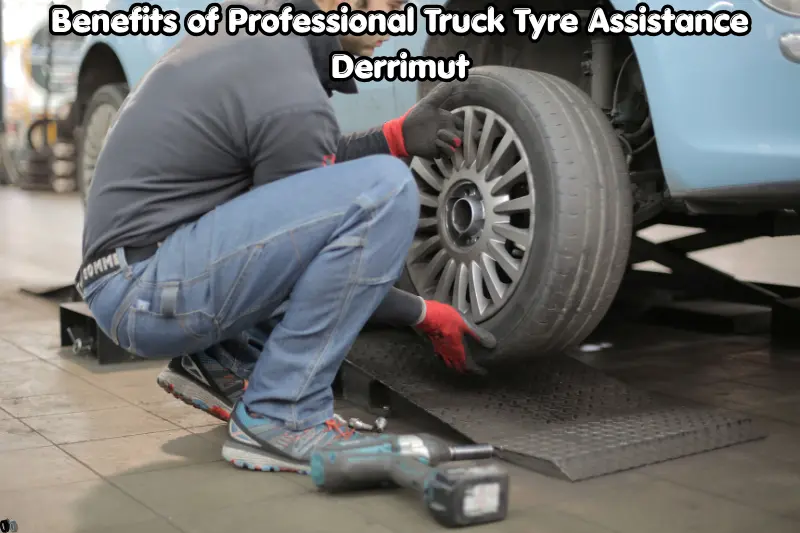
Professional roadside support can provide several practical advantages for truck drivers and transport businesses.
Reduced Downtime
A truck that cannot operate can interrupt deliveries and schedules. Mobile assistance may allow the issue to be addressed at the roadside instead of requiring the vehicle to be transported to a workshop.
Improved Roadside Safety
Working around a heavy truck near traffic can be dangerous. Professional technicians have the appropriate experience and equipment for heavy-vehicle tyre work.
Convenience for Fleet Operators
Fleet managers can coordinate roadside assistance without necessarily sending another vehicle or arranging immediate workshop transportation.
Suitable Equipment
Truck tyres are different from ordinary passenger-car tyres. Heavy vehicles may require specialist tools, lifting equipment, and replacement tyres.
Better Problem Identification
A qualified technician can look beyond the obvious flat tyre and identify related concerns that may need attention.
How to Choose Truck Tyre Assistance Derrimut in Derrimut
Not every roadside tyre provider offers the same level of heavy-vehicle support. Before selecting a service, consider several factors.
Confirm Heavy Vehicle Experience
Ask whether the provider regularly works with trucks, trailers, buses, or other heavy vehicles.
A provider experienced with passenger cars may not have the equipment or replacement stock required for a large commercial truck.
Ask About Mobile Service
If the truck is stranded, a mobile service is often more practical than arranging transport to a tyre shop.
Confirm whether the provider covers the truck’s exact location.
Check Tyre Availability
Before dispatch, provide the tyre size and vehicle information if available.
This can improve the chance that the technician arrives with a suitable replacement.
Ask About Response Expectations
Roadside assistance times can vary depending on traffic, workload, distance, weather, and the nature of the breakdown.
A professional provider should communicate realistic expectations rather than making promises it cannot guarantee.
Consider Fleet Support
Businesses operating multiple trucks may benefit from a provider that can support recurring tyre inspections, replacements, and emergency callouts.
Preventing Truck Tyre Failures
Emergency assistance is useful, but prevention should remain part of a truck maintenance strategy.
Check Tyres Regularly
Drivers and fleet operators should inspect tyres for visible damage, unusual wear, tread issues, and other warning signs.
Regular inspections can help identify problems before they become roadside failures.
Monitor Tyre Pressure
Incorrect tyre pressure can affect tyre performance and load-carrying capability.
Where appropriate, fleet operators can use tyre pressure monitoring technology to identify pressure changes earlier. NHVR guidance recognises tyre-pressure monitoring as one type of vehicle telematics information that can support heavy-vehicle safety management.
Avoid Overloading
The vehicle and its tyres need to be suitable for the load being carried.
Heavy vehicle safety requirements include ensuring that tyres have sufficient size and capacity for the mass transmitted through the axle. The current NHVR inspection manual also addresses tyre and wheel conditions such as tyre capacity, dual-tyre contact, and other defects.
Watch for Uneven Wear
Uneven wear can be an early warning sign of mechanical or tyre-related problems.
If one tyre is wearing differently from others, investigate the cause rather than simply replacing the damaged tyre.
Keep Maintenance Records
Fleet operators should maintain useful records of inspections, repairs, replacements, and recurring tyre problems.
These records can help identify patterns and support a structured maintenance process.
Truck Tyre Assistance Derrimut vs DIY Tyre Repair
For small passenger vehicles, some drivers may carry basic tools for emergencies. Heavy truck tyres are a different matter.
Truck tyre replacement and repair can involve substantial weight, stored energy, specialised equipment, and roadside hazards.
DIY work can become dangerous when the vehicle is loaded, positioned near traffic, or fitted with specialised wheel and tyre assemblies.
For serious truck tyre failures, professional assistance is generally the safer approach.
Common Mistakes to Avoid
Continuing to Drive on a Flat Tyre
Driving on a flat or severely damaged tyre can increase damage and may create additional safety risks.
Ignoring Warning Signs
Vibration, pulling, unusual noise, pressure loss, or visible tyre damage should not automatically be dismissed.
Choosing a Passenger-Car Tyre Service
A provider may advertise mobile tyre assistance but have limited heavy-vehicle capability.
Always confirm that the service is equipped for trucks and trailers.
Giving an Incomplete Location
Roadside technicians need to know where the vehicle is positioned.
Provide the road name, nearby landmark, direction of travel, and other useful location details when possible.
Focusing Only on Price
The cheapest callout is not necessarily the most suitable option.
Consider availability, heavy-vehicle experience, equipment, replacement options, safety practices, and service coverage.
Why Tyre Maintenance Matters for Fleet Safety
Tyre maintenance should be part of a broader heavy-vehicle safety system rather than treated as an isolated repair task.
The NHVR explains that parties within the Chain of Responsibility have duties relating to the safety of heavy vehicle transport activities. Its safety-management guidance encourages operators to identify hazards, implement controls, and monitor risks across transport operations.
This means businesses should consider tyre condition alongside vehicle maintenance, loading, scheduling, driver practices, fatigue management, and other operational risks.
A strong maintenance process can help businesses respond to problems before they become larger operational or safety issues.
For reliable heavy vehicle support, explore our truck mechanic Derrimut, mobile truck repairs Derrimut, truck roadside assistance Derrimut, and heavy vehicle repairs Derrimut services to keep your commercial vehicle safe and road-ready.
For official information about heavy vehicle safety, defects, compliance, and safety management in Australia, visit the National Heavy Vehicle Regulator (NHVR) for authoritative guidance and current regulatory information.
When Should You Call Truck Tyre Assistance Derrimut?
You should consider professional Truck tyre assistance Derrimut when the tyre is flat, seriously damaged, losing pressure repeatedly, showing dangerous sidewall damage, suffering a blowout, or cannot be safely inspected or repaired by the driver.
You should also request assistance if continuing to drive could put the driver, vehicle, cargo, or other road users at risk.
If a heavy vehicle has an immediate and serious safety problem, follow emergency and road-safety procedures first. The NHVR states that vehicles presenting an imminent and serious safety risk may need immediate repair or may not be permitted to continue on the road.
Frequently Asked Questions
What is Truck tyre assistance Derrimut?
Truck tyre assistance Derrimut is roadside support for trucks and heavy vehicles experiencing tyre-related problems in Derrimut and surrounding areas. Depending on the provider, services can include tyre inspection, puncture assessment, mobile tyre replacement, inflation, and other roadside tyre support. Availability depends on the vehicle, tyre, location, and service provider.
Can a mobile truck tyre service replace a blown tyre?
Yes, a mobile heavy-vehicle tyre service may be able to replace a damaged or blown tyre at the roadside. The technician will need information about the truck, tyre size, location, and damage. Availability of the correct replacement tyre and safe working conditions can affect whether roadside replacement is possible.
How can I prevent truck tyre problems?
Regular tyre inspections, correct inflation, appropriate loading, timely replacement of damaged tyres, and investigation of unusual wear can help reduce tyre-related problems. Fleet operators can also use maintenance records and suitable tyre-pressure monitoring systems to identify potential issues earlier.
Is it safe to drive with a damaged truck tyre?
It depends on the type and severity of damage, but a seriously damaged, flat, or rapidly losing-pressure tyre should not simply be ignored. Continuing to drive may worsen the damage and create safety risks. Move to a safe location where possible and obtain professional advice before continuing.
What information should I provide when requesting tyre assistance?
Provide your exact location, truck or trailer type, tyre position, tyre size if known, description of the problem, whether the vehicle is loaded, and whether it is safely positioned. Clear information helps the roadside technician understand what equipment and replacement options may be required.
Practical Checklist for Truck Drivers
Keep this simple checklist available in your vehicle:
- Check the truck’s position and surrounding traffic.
- Move to a safer location when possible.
- Use hazard warning lights when appropriate.
- Avoid unsafe roadside tyre work.
- Identify the affected tyre.
- Note the tyre size if safely available.
- Contact a heavy-vehicle tyre service.
- Explain the problem clearly.
- Follow the technician’s safety instructions.
- Do not continue driving until the tyre issue has been properly assessed.
Final Thoughts
Truck tyre assistance Derrimut can be an important roadside resource when a commercial vehicle experiences a puncture, blowout, pressure loss, sidewall damage, or another tyre problem. The right response is to prioritise safety, move away from traffic where possible, avoid risky repairs, and contact a service equipped to handle heavy vehicles.
For fleet operators, emergency assistance should be supported by preventative maintenance. Regular tyre inspections, pressure management, appropriate loading, maintenance records, and early attention to unusual wear can all contribute to a safer and more reliable operation.
The practical next step is simple: keep the contact details of a suitable heavy-vehicle tyre assistance provider available before a breakdown happens. When an unexpected tyre failure occurs, having the right information and support ready can make the situation easier to manage.
