

Introduction
Emergency truck repair Derrimut is designed to help truck drivers and fleet operators deal with unexpected mechanical problems when a commercial vehicle cannot safely continue its journey. A truck breakdown can happen on a busy road, at a depot, near a loading facility, or during a long-distance delivery, creating safety concerns as well as delays.
This guide explains what emergency truck repair involves, which problems commonly require roadside assistance, how to respond when a truck stops working, what services a mobile mechanic may provide, and how businesses can reduce future breakdown risks.
For truck drivers and fleet operators, emergency truck repair Derrimut can be especially useful when a vehicle develops a sudden mechanical or electrical fault during a delivery. Getting professional assistance at the breakdown location can help determine whether the truck can be repaired safely or needs further recovery and workshop attention.
What Is Emergency Truck Repair Derrimut?
A reliable emergency truck repair Derrimut service should be prepared to handle different types of commercial vehicle breakdowns. Depending on the truck and the nature of the fault, roadside assistance may include fault diagnosis, battery assistance, electrical troubleshooting, cooling-system checks, brake inspections, tyre assistance, or arrangements for vehicle recovery.
Emergency truck repair Derrimut refers to urgent mechanical assistance provided when a truck experiences a breakdown or serious mechanical problem and cannot reasonably continue its journey.
Instead of immediately arranging a standard workshop appointment, a mobile or roadside truck mechanic can travel to the vehicle’s location to inspect the problem. Depending on the fault, the mechanic may complete a temporary or permanent repair at the roadside, or recommend towing the truck to a suitable workshop.
Common emergency situations include:
- Engine failure
- Battery problems
- Starter motor failure
- Alternator faults
- Brake problems
- Cooling-system issues
- Electrical faults
- Transmission problems
- Air-system failures
- Flat or damaged tyres
- Fuel-system problems
- Overheating
- Warning lights or sudden loss of vehicle performance
The exact service available depends on the truck, fault, location, equipment, and safety conditions at the breakdown site.
Why Do Trucks Break Down in Derrimut?
Truck breakdowns can result from several different causes. Some are connected to normal component wear, while others develop because of poor maintenance, excessive operating loads, environmental conditions, or an unexpected component failure.
Engine Problems
The engine is one of the most important systems in a commercial truck. Problems involving fuel delivery, lubrication, cooling, sensors, belts, hoses, or internal components can cause poor performance or complete engine failure.
Signs may include unusual noises, excessive smoke, overheating, loss of power, difficult starting, or warning lights.
A driver should not continue operating a truck when a serious engine problem creates a risk of further damage or unsafe operation.
Battery and Electrical Faults
Electrical problems can prevent a truck from starting even when the engine itself is mechanically healthy.
A weak battery, damaged cable, failed alternator, starter problem, blown fuse, or wiring fault may leave a vehicle stranded. Modern trucks can also depend heavily on electronic control systems, making electrical diagnostics an important part of emergency repair.
Brake Problems
Brake faults should always be treated seriously. Problems may involve brake components, air pressure, hoses, chambers, sensors, or related systems.
If braking performance changes noticeably, the truck should be stopped in a safe location and assessed by a qualified professional rather than continuing to drive in the hope that the problem disappears.
Cooling-System Failure
Heavy vehicles can generate significant heat during demanding operation. A damaged hose, radiator problem, coolant leak, thermostat issue, fan problem, or other cooling-system fault can lead to overheating.
Continuing to operate an overheating engine can turn a relatively manageable problem into a much more expensive repair.
When a truck stops unexpectedly, emergency truck repair Derrimut services can help operators identify the cause of the breakdown before making a decision about continuing the journey. This is important because a truck that appears to have a minor fault may have an underlying mechanical or electrical problem requiring professional attention.
What Should a Driver Do During a Truck Breakdown?
The first priority during a breakdown is safety, not speed.
If a truck develops a serious fault, the driver should reduce risk as much as reasonably possible and avoid unnecessary work around moving traffic.
1. Stop in the Safest Available Location
If the truck can still move safely, the driver should attempt to reach a suitable safe location away from traffic.
If the vehicle cannot move, the driver should avoid taking unnecessary risks trying to relocate it.
2. Activate Appropriate Warning Systems
Use the truck’s hazard warning lights and follow applicable road-safety procedures. The driver should make the vehicle as visible as reasonably possible while waiting for assistance.
3. Contact Emergency Truck Repair Derrimut
Provide the repair provider with useful information such as:
- Exact location
- Truck make and model
- Registration details
- Type of breakdown
- Warning lights displayed
- Whether the truck is carrying a load
- Whether the vehicle can move
- Road or traffic conditions
- Any unusual sounds, smoke, leaks, or smells
Accurate information can help the mechanic prepare appropriate diagnostic equipment and replacement parts.
4. Avoid Unsafe Roadside Repairs
Drivers should not attempt repairs that place them or other people in danger.
For example, working beneath a heavy truck without suitable equipment or protection can create serious hazards. If the location is dangerous, professional recovery may be more appropriate than roadside repair.
The National Heavy Vehicle Regulator provides guidance on managing heavy vehicle safety risks and maintaining safe transport operations.
What Services Can a Mobile Truck Mechanic Provide?
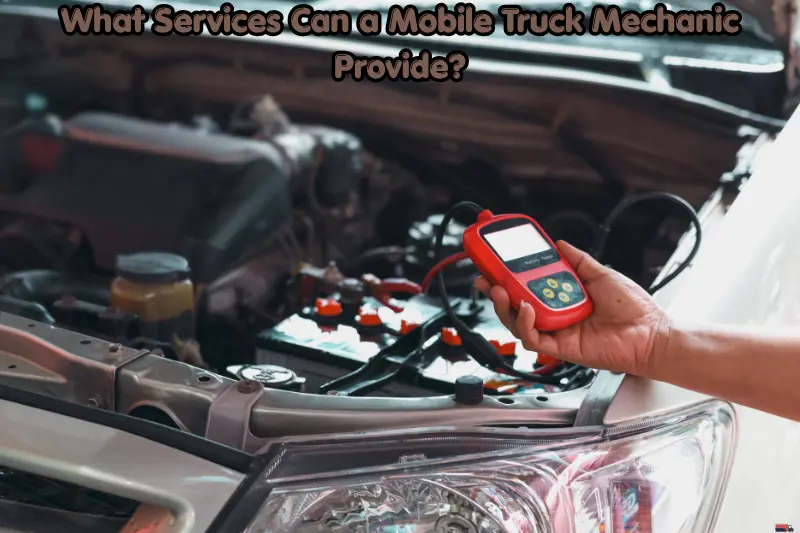
A mobile truck mechanic may be able to diagnose and repair several common roadside problems.
The exact capabilities vary by provider and vehicle type, but emergency assistance can include:
Battery and Starting Assistance
A mechanic can inspect the battery, cables, starter circuit, and charging system. If the battery is discharged or faulty, appropriate starting or replacement assistance may be possible.
Diagnostic Scanning
Modern trucks often contain electronic control modules. Diagnostic equipment can help identify stored fault codes and provide additional information about the system experiencing a problem.
However, a diagnostic code is not always the complete diagnosis. A qualified mechanic should interpret the information alongside physical inspections and other testing.
Brake and Air-System Inspection
For trucks using compressed-air braking systems, emergency technicians may inspect relevant components and identify obvious leaks or faults.
A vehicle should only return to service when its braking system and other safety-critical components are considered safe and compliant.
Cooling-System Repairs
Depending on the fault, emergency assistance may involve replacing a damaged hose, addressing a minor leak, checking coolant levels, or identifying why the engine is overheating.
More serious engine or cooling-system failures may require workshop repairs.
Electrical Repairs
A mobile mechanic may troubleshoot wiring, connectors, fuses, charging systems, sensors, and other electrical components.
Electrical diagnosis can be especially useful when a truck has suddenly lost power or refuses to start.
Tyre Assistance
A damaged commercial tyre can stop a truck from completing its journey. Roadside assistance may involve inspecting the tyre, changing it where appropriate, or arranging further recovery.
Benefits of Emergency Truck Repair Derrimut
Another advantage of emergency truck repair Derrimut assistance is that the technician can assess the truck at its actual breakdown location. This can save unnecessary movement of a vehicle that may not be safe to drive and can help determine whether a roadside repair, replacement part, or workshop recovery is the most suitable option.
Emergency roadside assistance can provide several practical advantages for truck operators.
Reduced Downtime
The biggest benefit is often reducing the amount of time a vehicle remains unavailable.
For a delivery business, a truck sitting beside the road can affect delivery schedules, customer commitments, drivers, and other vehicles. Getting professional assistance quickly can help the operator understand the problem and choose the most appropriate next step.
On-Site Diagnosis
A mobile mechanic can inspect the truck where the problem actually occurred.
This can be useful because the mechanic can observe symptoms, warning lights, leaks, and other conditions associated with the breakdown.
Convenient Fleet Support
Fleet operators may benefit from having access to a dependable emergency repair provider rather than searching for assistance every time a vehicle breaks down.
A planned roadside-support arrangement can become part of a broader fleet maintenance strategy.
Potentially Lower Recovery Requirements
Not every breakdown requires towing. If a suitable repair can be completed safely at the location, roadside assistance may eliminate the need for immediate workshop recovery.
However, towing or recovery remains appropriate when the truck cannot be safely repaired or operated at the roadside.
Emergency Repair vs Scheduled Truck Servicing
Emergency repair and preventive servicing serve different purposes.
| Emergency Truck Repair Derrimut | Scheduled Truck Servicing |
|---|---|
| Responds to unexpected faults | Prevents or identifies developing faults |
| Usually urgent | Planned in advance |
| Often performed at the breakdown location | Usually performed at a workshop or service facility |
| Focuses on restoring safe operation | Focuses on long-term vehicle condition |
| May involve recovery if repair is not possible | Helps reduce unexpected downtime |
The best approach is not to rely on emergency repair alone. Regular inspections and servicing can identify worn components before they become major failures.
How Businesses Can Reduce Truck Breakdown Risks
A strong maintenance program can reduce avoidable problems.
Perform Regular Inspections
Drivers and fleet managers should follow appropriate inspection procedures for their vehicles.
Checks may include tyres, lights, fluid levels, brakes, visible leaks, warning indicators, belts, hoses, and other relevant components.
The NHVR notes that heavy vehicles need to be maintained and roadworthy and provides guidance around daily checks and vehicle safety.
Track Maintenance History
Keep records of:
- Service dates
- Repairs
- Parts replaced
- Diagnostic findings
- Tyre changes
- Brake work
- Recurring faults
- Upcoming maintenance requirements
Maintenance records can help identify recurring problems and make future servicing more predictable.
Monitor Warning Signs
Small symptoms should not automatically be ignored.
Changes in engine sound, steering, braking, temperature, fuel consumption, vibration, electrical performance, or dashboard warnings can indicate developing problems.
Early inspection may prevent a minor fault from becoming a roadside breakdown.
Use Telematics Where Appropriate
Fleet telematics can provide useful information about vehicle operation and safety. The NHVR recognises telematics and safety technologies as tools that can support heavy vehicle safety management.
Technology does not replace professional inspection, but it can help fleet managers monitor vehicles and identify patterns that deserve attention.
How to Choose an Emergency Truck Repair Derrimut Provider
Before choosing an emergency truck repair Derrimut provider, fleet managers should check whether the service has experience with commercial trucks and heavy vehicles. It is also useful to confirm mobile availability, diagnostic capabilities, emergency response coverage, and the types of repairs the technician can perform at the roadside.
Choosing a roadside mechanic should involve more than searching for the fastest available number.
Consider these factors before selecting a provider:
Experience With Heavy Vehicles
A truck is not simply a larger passenger vehicle. Heavy vehicles can have different braking systems, electrical architecture, engines, transmissions, suspension components, and diagnostic requirements.
Look for a provider with relevant commercial vehicle experience.
Mobile Capability
Confirm that the provider actually offers mobile or roadside assistance and can reach the locations where your trucks operate.
Diagnostic Equipment
Modern heavy vehicles may require electronic diagnostic tools. Ask whether the provider has equipment suitable for your truck type.
Availability
Breakdowns do not always occur during convenient business hours. If your fleet operates early mornings, evenings, weekends, or long routes, ask about emergency availability before an incident occurs.
Clear Communication
A reliable provider should explain the suspected problem, available repair options, safety limitations, and whether further workshop work is required.
Common Mistakes to Avoid After a Truck Breakdown
Several mistakes can make a breakdown more expensive or dangerous.
Continuing to Drive With a Serious Fault
Trying to reach the next depot while a truck has a major mechanical or braking problem can increase the risk of further damage and create safety concerns.
Ignoring Dashboard Warnings
Warning lights should not automatically be dismissed as minor issues. The meaning depends on the truck and system involved.
Attempting Complex Repairs Without Proper Equipment
Heavy vehicle repairs may involve heavy components, pressurised systems, electrical hazards, or unstable roadside conditions. Untrained roadside repairs can create additional risks.
Choosing a Provider Only Because It Is Cheap
Price matters, but emergency truck repair should also be judged on experience, response capability, equipment, communication, and quality of work.
Failing to Investigate Recurring Problems
If the same truck repeatedly requires roadside assistance for similar faults, the underlying issue should be investigated rather than repeatedly treating the symptoms.
Emergency Truck Repair Derrimut for Fleet Operators
Fleet operators should think about emergency repair as part of a wider vehicle management system.
A simple digital fleet maintenance process can help businesses record service schedules, breakdown history, inspections, repair invoices, vehicle information, and upcoming maintenance requirements.
For companies managing multiple trucks, software-based maintenance tracking can make it easier to see which vehicles require attention and which repairs are recurring.
A practical fleet workflow might look like this:
- Driver reports a fault.
- Fleet manager records the incident.
- Emergency mechanic is contacted.
- Vehicle location and fault details are shared.
- Mechanic diagnoses the problem.
- Repair or recovery is arranged.
- Repair details are recorded.
- Follow-up inspection or servicing is scheduled.
- The incident is reviewed to prevent recurrence.
This process connects emergency response with long-term fleet maintenance instead of treating every breakdown as an isolated event.
Internal Linking Opportunity
If you need ongoing support after a breakdown, explore our related services for truck repairs Derrimut, mobile truck mechanic Derrimut, diesel mechanic Derrimut, and heavy vehicle repairs Derrimut. These services can help with routine maintenance, diagnostics, mechanical repairs, and other commercial vehicle requirements.
For official information about heavy vehicle safety, maintenance responsibilities, and compliance requirements in Australia, visit the National Heavy Vehicle Regulator (NHVR). The NHVR provides guidance for operators, drivers, and transport businesses on managing heavy vehicle safety and compliance.
When Should a Truck Be Towed Instead of Repaired Roadside?
A truck should generally be recovered or towed when the vehicle cannot be made safe to operate at the breakdown location.
Examples may include major engine failure, severe transmission damage, serious structural damage, significant brake-system faults, extensive electrical problems, or a breakdown location where roadside work cannot be completed safely.
The mechanic should assess the vehicle and explain whether a roadside repair is appropriate or whether workshop-level repair is necessary.
Safety should always take priority over getting the vehicle moving as quickly as possible.
What Information Should You Give the Mechanic?
Providing accurate information can make emergency assistance more efficient.
Before calling, if it is safe to do so, note:
- Truck make and model
- Approximate vehicle size or configuration
- Exact location
- Direction of travel
- Nature of the problem
- Dashboard warning messages
- Whether the engine starts
- Whether the truck can move
- Visible fluid leaks
- Unusual sounds
- Load information
- Contact details for the driver
Do not put yourself in danger to collect information. If the breakdown is associated with a crash or immediate emergency, emergency services should be contacted through the appropriate channel. The NHVR states that crashes requiring immediate emergency service response should be reported to 000.
Frequently Asked Questions
What is emergency truck repair Derrimut?
Emergency truck repair Derrimut is urgent roadside mechanical assistance for trucks that experience unexpected faults in or around Derrimut. Depending on the problem, a mobile mechanic may diagnose the vehicle, repair certain components at the location, or arrange recovery to a workshop when roadside repair is unsafe or impractical.
How quickly can a mobile truck mechanic arrive?
Response time depends on the provider’s availability, current workload, traffic, distance, road conditions, and the exact breakdown location. When requesting emergency assistance, provide an accurate location and clear description of the problem. This helps the provider determine the appropriate technician, equipment, and recovery requirements.
Can every truck breakdown be repaired at the roadside?
No. Some faults require workshop-level equipment, specialist parts, or extensive mechanical work. Serious engine, transmission, structural, braking, or electrical problems may require recovery. A qualified technician should assess the vehicle and determine whether it can be safely repaired and returned to service at the breakdown location.
What should I do if my truck breaks down on the road?
First, prioritise safety and move the truck to a safe location if it can be done without creating additional risk. Activate appropriate warning systems, stay alert to surrounding traffic, and contact a professional emergency truck repair Derrimut provider. Provide the truck’s location and details of the mechanical problem.
How can fleet operators prevent emergency truck breakdowns?
Preventive maintenance, regular inspections, accurate maintenance records, timely repairs, driver reporting, and appropriate fleet-management systems can help reduce avoidable breakdowns. Operators should investigate recurring faults rather than repeatedly treating the same symptom. Proper maintenance also supports broader heavy vehicle safety responsibilities.
Conclusion
Emergency truck repair Derrimut provides an important solution when a commercial vehicle develops an unexpected mechanical problem and cannot safely continue its journey. Professional roadside assistance can help diagnose common issues involving engines, batteries, electrical systems, brakes, cooling systems, tyres, transmissions, and other components.
Having access to emergency truck repair Derrimut support can give fleet operators a practical response when an unexpected breakdown interrupts a delivery. Keeping a trusted repair provider’s details available, maintaining accurate vehicle records, and following a preventive maintenance schedule can make breakdown management much easier.
However, emergency repair should not replace preventive maintenance. Regular inspections, service records, timely repairs, driver reporting, and effective fleet-management processes can help identify problems before they result in roadside downtime.
