

Introduction
Truck brake service Derrimut is an essential part of keeping heavy vehicles safe, reliable, and ready for demanding road conditions. A truck’s braking system must handle significant vehicle weight, changing loads, repeated stops, and long operating hours. This article explains what truck brake service involves, common brake problems, warning signs, inspection steps, maintenance benefits, service considerations, and practical ways fleet operators can reduce brake-related downtime.
For businesses operating trucks around Derrimut and Melbourne’s western industrial areas, brake maintenance should be treated as a planned safety activity rather than something to arrange only after a failure. A professional inspection can identify worn components, air-system problems, adjustment issues, leaks, or electronic braking faults before they become more serious.
The same principle is useful for transport businesses, logistics operators, delivery fleets, and companies managing heavy vehicles in India or other markets: braking performance should always be matched to the vehicle manufacturer’s requirements, operating conditions, load, and applicable regulations.
What Is Truck Brake Service Derrimut?
Truck brake service Derrimut refers to the inspection, testing, maintenance, adjustment, and repair of a truck’s braking system by a qualified heavy-vehicle technician. The exact work depends on the truck, brake design, fault symptoms, component condition, and manufacturer requirements.
A modern truck may use air brakes, hydraulic components, ABS, electronic braking systems, disc brakes, drum brakes, automatic slack adjusters, sensors, and other related equipment. Because these components work together, a brake problem is not always caused by the brake pad or lining alone.
A proper service can include:
- Brake component inspection
- Brake pad or lining assessment
- Disc and drum inspection
- Air pressure and air-system checks
- Brake hose and pipe inspection
- Slack adjuster and actuator checks
- ABS and EBS fault diagnosis
- Brake adjustment where applicable
- Brake performance testing
- Inspection for leaks, contamination, damage, or excessive wear
- Replacement of defective components
The National Heavy Vehicle Inspection Manual provides inspection criteria for heavy vehicle brake systems, including checks for brake components, hoses, pipes, connections, park brakes, and braking performance.
Why Regular Truck Brake Service Derrimut Matters
Regular brake servicing helps identify developing faults before they affect braking performance. For a heavy vehicle, even a relatively small braking-system issue can become more serious when the vehicle is carrying a heavy load or operating on a long route.
1. Improves Braking Reliability
The main purpose of a brake system is straightforward: it must slow and stop the vehicle effectively. Regular inspection helps technicians identify worn, damaged, leaking, or incorrectly adjusted components.
2. Helps Protect Drivers and Other Road Users
A well-maintained braking system supports predictable vehicle control. This becomes especially important when trucks operate around busy roads, intersections, loading areas, highways, and industrial zones.
3. Reduces Unexpected Downtime
Preventive maintenance can identify problems while the truck is already scheduled for service. Addressing a developing fault may be easier than dealing with an unexpected roadside breakdown.
4. Supports Compliance
Heavy vehicle operators have responsibilities relating to vehicle condition and roadworthiness. The NHVR states that operators must ensure heavy vehicles comply with applicable safety standards and that defective vehicles are not used on the road.
5. Protects Other Brake Components
A worn or damaged component can sometimes place additional stress on other parts of the braking system. Early diagnosis helps technicians determine the underlying cause instead of simply replacing one visible component.
Common Signs Your Truck Needs Brake Service
Truck operators should not ignore changes in braking behaviour. Some brake problems are obvious, while others appear gradually.
Increased Stopping Distance
If a truck takes noticeably longer to slow down under similar conditions, the braking system should be inspected. Do not assume the issue is simply caused by the vehicle being loaded.
Brake Pulling or Uneven Braking
If the vehicle moves or pulls to one side during braking, there may be an issue involving brake performance, adjustment, contamination, suspension, tyres, or another related component.
Unusual Brake Noise
Grinding, scraping, knocking, or unusual air-system sounds can indicate a problem. Not every noise means the same thing, so proper diagnosis is important.
Air Pressure Problems
For trucks using air brakes, unusual pressure behaviour, slow pressure build-up, air leaks, or warning indicators should be investigated promptly.
Brake Warning Lights
ABS, EBS, or other brake-related warning lights should never be ignored. Electronic braking systems can detect faults that may not be obvious from the driver’s seat.
Vibrations During Braking
Steering-wheel or vehicle vibration during braking can have several possible causes, including brake component condition, uneven braking, wheel issues, or other mechanical problems.
Burning Smell or Excessive Heat
A strong burning smell after braking can indicate excessive heat or a component that is not operating correctly. The truck should be assessed rather than continuing normal operation without investigation.
What Does a Truck Brake Service Derrimut Include?
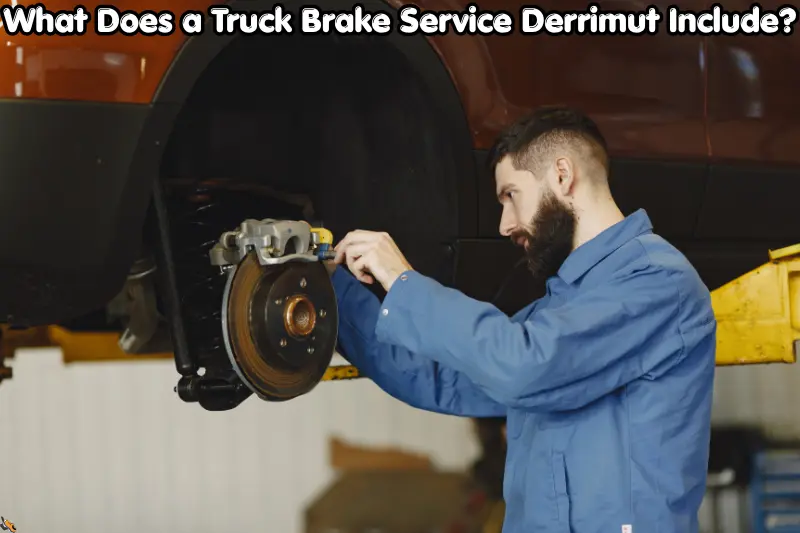
The exact inspection varies by truck model and braking system, but a professional brake service normally starts with a systematic assessment rather than immediate parts replacement.
Visual Inspection
The technician checks visible brake components for wear, damage, contamination, loose connections, leaks, and other obvious problems. Brake hoses, pipes, fittings, chambers, drums, discs, and related components may be inspected.
Air Brake System Inspection
On air-braked trucks, technicians may check air pressure, lines, reservoirs, valves, connections, chambers, and other components. Water, contamination, damaged hoses, or air leaks can affect system performance.
The NHVR’s current inspection manual identifies damaged, cracked, kinked, heat-damaged, leaking, swollen, or bulging brake pipes and hoses as reasons for rejection during inspection.
Pads, Linings, Discs, and Drums
Depending on the brake design, technicians inspect friction materials and braking surfaces. Excessive wear, cracking, contamination, scoring, or other damage may indicate that replacement or further investigation is required.
Adjusters and Actuators
Components such as slack adjusters and brake actuators help transfer braking force. Incorrect adjustment or mechanical problems can affect brake performance.
ABS and EBS Diagnostics
Modern heavy vehicles can contain electronic brake-control systems. Diagnostic equipment may be used to identify stored faults, sensor problems, wiring issues, or communication errors.
Brake Performance Testing
A professional service may include appropriate brake testing according to the vehicle and applicable inspection requirements. The NHVR publishes specific guidance and procedures for heavy vehicle brake testing.
Truck Brake Service Derrimut: Step-by-Step Process
A practical brake service usually follows a structured process.
- Discuss the symptoms: The technician asks about warning lights, noises, braking behaviour, recent repairs, load conditions, and operating patterns.
- Inspect the braking system: Visible components and related systems are examined for wear, damage, leaks, contamination, and adjustment problems.
- Test the system: Appropriate pressure, electronic, mechanical, or brake-performance tests are carried out.
- Identify the root cause: The technician determines whether the issue comes from friction components, air supply, adjustment, electronics, wheel-end components, or another related system.
- Repair or replace defective components: Parts are replaced or repaired according to the manufacturer’s specifications and applicable requirements.
- Re-test the vehicle: The system is checked again after repairs to confirm that the identified issue has been addressed.
- Document the work: Keeping service and repair records helps fleet managers monitor recurring problems and plan future maintenance.
Benefits of Preventive Truck Brake Service Derrimut Maintenance
Preventive maintenance is generally more practical than waiting for a major brake problem. It can help fleet operators manage safety, maintenance planning, and vehicle availability.
Important benefits include:
- Better awareness of brake component condition
- Earlier identification of developing faults
- More predictable maintenance planning
- Reduced risk of unexpected mechanical downtime
- Better maintenance records
- Improved fleet inspection processes
- Greater confidence before long-distance operations
The NHVR recommends regular maintenance, daily checks, fault reporting, and timely repair of identified defects as part of managing heavy vehicle safety.
How Often Should Truck Brake Service Derrimut Be Serviced?
There is no single service interval that applies to every truck. The appropriate schedule depends on the manufacturer’s recommendations, vehicle design, kilometres travelled, load, driving environment, braking demands, and fleet operating conditions.
For example, a truck making frequent stops in urban traffic can experience a different braking workload from a vehicle travelling long highway routes. Trucks working in dusty, wet, hilly, or demanding environments may also require closer attention.
Fleet operators should combine:
- Manufacturer service recommendations
- Regular driver inspections
- Scheduled preventive maintenance
- Brake performance checks
- Fault and repair records
- Operating-condition assessments
The NHVR notes that service intervals should reflect how a vehicle is used and the environment in which it operates.
Common Truck Brake Problems
Understanding common problems can help drivers recognise when professional inspection is necessary.
Worn Brake Pads or Linings
Friction material gradually wears during normal operation. Once it reaches an unacceptable condition, replacement may be required.
Air Leaks
Air leaks can reduce system efficiency and may prevent the braking system from operating as intended. Hissing sounds or unusual compressor behaviour can be warning signs.
Damaged Brake Hoses
Brake hoses exposed to heat, movement, abrasion, or poor routing can deteriorate. Damaged hoses require professional assessment and, where necessary, replacement.
Incorrect Brake Adjustment
Some braking systems require appropriate adjustment or inspection of adjustment mechanisms. Incorrect adjustment can affect braking performance.
Faulty ABS Sensors
ABS sensors provide information used by electronic braking systems. A damaged sensor, wiring issue, or related fault can trigger a warning and require diagnostic testing.
Overheated Brakes
Repeated heavy braking, incorrect adjustment, mechanical problems, or demanding operating conditions can contribute to excessive heat. The underlying cause should be identified rather than simply allowing the system to cool.
Choosing a Truck Brake Service Derrimut Provider in Derrimut
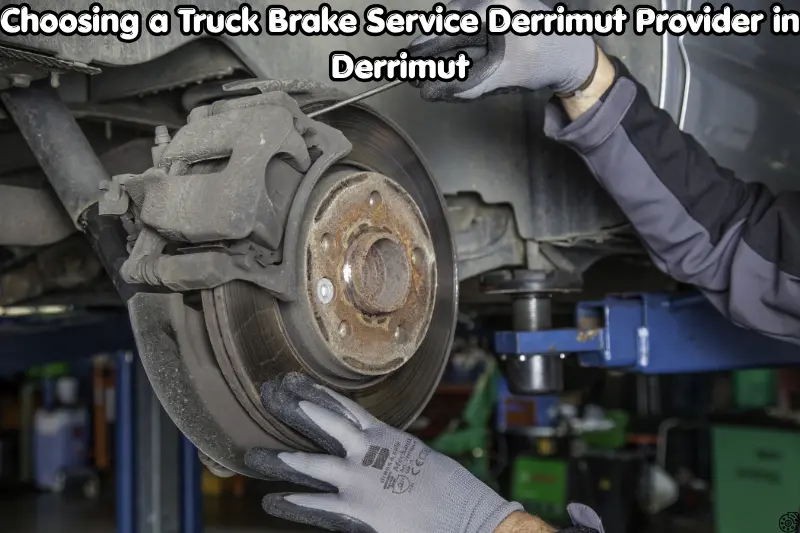
Choosing a brake service provider should involve more than comparing the cheapest quote. Heavy vehicle braking systems require suitable knowledge, equipment, and experience.
Look for a provider that:
- Works with heavy commercial vehicles
- Understands air and electronic braking systems
- Uses appropriate diagnostic and testing equipment
- Provides clear inspection findings
- Uses suitable replacement components
- Follows manufacturer specifications
- Maintains proper service records
- Explains urgent and non-urgent repairs clearly
For fleet operators, it is also useful to ask whether the provider can support scheduled maintenance and multiple vehicles rather than only emergency repairs.
Truck Brake Service Derrimut for Fleet Operators
Fleet managers can improve maintenance consistency by treating brake inspections as part of an overall vehicle maintenance system.
A simple fleet process can include:
- Driver completes a daily vehicle check.
- Brake-related faults are recorded immediately.
- Unsafe vehicles are removed from operation when necessary.
- A qualified technician investigates reported problems.
- Repairs are documented.
- Vehicles are rechecked before returning to service.
- Recurring brake issues are reviewed for patterns.
This approach can be especially useful for fleets operating several trucks because repeated faults may indicate broader maintenance, loading, component, or operating issues.
Common Mistakes to Avoid
Waiting for a Complete Brake Failure
A truck does not need to lose all braking ability before maintenance becomes necessary. Changes in braking performance, warning lights, unusual noises, or air-system symptoms should be investigated.
Replacing Parts Without Finding the Cause
Simply replacing a worn component may not solve the underlying problem. A professional diagnosis should determine why the component failed or wore prematurely.
Ignoring Electronic Warnings
ABS and EBS warning indicators can provide important information. Continuing to operate without diagnosing the problem may increase risk.
Skipping Maintenance Because the Truck Feels Fine
Some defects are not immediately noticeable during normal driving. Scheduled inspections are therefore important even when there are no obvious symptoms.
Using Incorrect Parts
Brake components must be suitable for the specific vehicle and braking system. Incorrect parts can compromise performance and may create compliance issues.
Truck Brake Service Derrimut and Digital Fleet Management
For modern transport businesses, brake maintenance can be integrated into a broader fleet-management or SaaS platform. A digital system can help operators record service dates, inspection results, repair history, fault reports, vehicle information, and upcoming maintenance tasks.
For example, a fleet manager could create a maintenance record for each truck and receive a reminder when an inspection is due. Drivers could also report brake warning lights or unusual symptoms through a digital workflow, allowing the maintenance team to review the issue before the next scheduled service.
Technology does not replace a qualified mechanic or physical brake inspection. Instead, it can make maintenance information easier to organise, track, and communicate across a fleet.
Internal Linking Opportunities
For a website covering commercial vehicle maintenance, this article can naturally connect to related service pages such as [INTERNAL LINKS]. Relevant internal pages may cover truck servicing, mobile truck repairs, diesel mechanic services, heavy vehicle repairs, suspension inspections, or general fleet maintenance. Use descriptive anchor text that tells readers what they will find on the linked page instead of using generic anchors such as “click here.”
When Should a Truck Be Taken Off the Road?
A truck should not continue operating when a serious brake defect makes the vehicle unsafe or prevents the braking system from performing its intended function. Warning signs such as major air loss, significant brake damage, severe braking imbalance, or serious brake-system warnings require immediate professional assessment.
The NHVR states that an unsafe heavy vehicle should not be used until the relevant defect has been rectified and the vehicle is safe.
Drivers should never attempt to diagnose a serious brake fault while continuing to operate the truck simply to reach a destination. Safety should take priority over delivery schedules.
Practical Brake Maintenance Tips for Truck Drivers
Drivers play an important role in identifying changes before they become larger maintenance problems.
Before operating a truck, pay attention to:
- Brake warning indicators
- Air-pressure behaviour
- Unusual noises
- Visible leaks or damage
- Changes in braking response
- Pulling or instability during braking
- Unusual smells
- Changes noticed after loading
Drivers should report concerns rather than assuming another person will notice them. A small observation recorded early can help a technician diagnose a fault more efficiently.
Why Professional Brake Inspection Is Better Than DIY Repair
Truck braking systems are safety-critical components. Basic visual checks and driver inspections are useful, but major repairs, adjustment, diagnostics, and testing should be performed by appropriately qualified professionals using suitable equipment and procedures.
A DIY approach can also create another problem: replacing a component without understanding the complete system may leave the original fault unresolved. Professional diagnosis helps connect symptoms with the correct mechanical or electronic cause.
Trusted Heavy Vehicle Brake Guidance
For authoritative Australian heavy vehicle information, operators can refer to the National Heavy Vehicle Regulator (NHVR) and its National Heavy Vehicle Inspection Manual. The manual provides inspection criteria for heavy vehicles, including a dedicated section covering brakes and brake performance.
NHVR National Heavy Vehicle Inspection Manual
Frequently Asked Questions
What does truck brake service Derrimut include?
Truck brake service Derrimut can include visual inspection, brake component checks, air-system inspection, brake adjustment where applicable, ABS or EBS diagnostics, brake testing, and replacement of defective components. The exact work depends on the truck model, braking system, operating conditions, manufacturer requirements, and symptoms reported by the driver.
How do I know if my truck brakes need servicing?
Warning signs can include increased stopping distance, pulling during braking, unusual brake noises, vibrations, burning smells, air-pressure problems, or ABS/EBS warning lights. A truck can also have developing brake defects without obvious symptoms, which is why scheduled inspections and preventive maintenance remain important.
How often should truck brakes be inspected?
Brake inspection frequency depends on the manufacturer’s recommendations, truck usage, load, kilometres travelled, driving environment, and braking demands. Trucks operating in demanding conditions may require closer attention. Fleet operators should combine scheduled servicing with driver checks and prompt investigation of reported brake problems.
Can a truck drive with an ABS warning light?
An ABS warning light should not be ignored. The light can indicate a fault in the electronic braking or ABS system, although the exact effect depends on the vehicle and fault. The truck should be assessed according to the manufacturer’s guidance and applicable safety requirements before normal operation continues.
Why is professional Truck Brake Service Derrimut important?
Professional service helps identify problems that may not be obvious during a basic visual check. Heavy vehicle braking systems can involve air, mechanical, hydraulic, and electronic components. Qualified technicians can inspect, diagnose, repair, and test these systems using suitable procedures and equipment rather than relying on guesswork.
Conclusion
Truck brake service Derrimut is an important part of responsible heavy vehicle maintenance. Regular inspections can identify worn components, air leaks, adjustment problems, electronic faults, damaged hoses, and other issues before they develop into more serious safety or downtime problems.
The best approach is to combine daily driver checks, scheduled preventive maintenance, manufacturer recommendations, professional inspections, appropriate brake testing, and accurate service records. Fleet operators should also investigate recurring brake problems instead of repeatedly replacing individual parts without finding the underlying cause.
If a truck shows unusual braking behaviour, warning lights, air-system problems, excessive noise, vibration, or other brake-related symptoms, arrange a professional inspection as soon as practical. For fleet managers, establishing a documented brake-maintenance process can make vehicle servicing more predictable and help keep heavy vehicles safe and roadworthy.
