


Truck Service Derrimut: Complete Guide to Reliable Heavy Vehicle Maintenance
Truck service Derrimut is essential for keeping commercial trucks safe, roadworthy, efficient, and ready for demanding work. Professional servicing helps identify mechanical problems early, reduce unexpected breakdowns, and support consistent vehicle performance.
Derrimut is an important industrial and logistics area in Melbourne’s western suburbs, where trucks regularly operate around warehouses, freight facilities, distribution centres, and major transport routes. This makes dependable truck maintenance particularly important for businesses that rely on heavy vehicles.
A proper service should cover more than a basic oil change. Depending on the vehicle and its operating conditions, technicians may inspect the engine, brakes, suspension, steering, tyres, transmission, cooling system, electrical components, and other safety-critical systems.
This guide explains what truck servicing involves, when it is required, the benefits of professional maintenance, common problems, emergency considerations, and practical ways to keep commercial vehicles operating reliably.
What Is Truck Service Derrimut?
truck service Derrimut refers to professional inspection, maintenance, diagnostics, and repair work carried out on trucks and other heavy commercial vehicles in and around Derrimut.
The exact service requirements depend on the truck’s manufacturer, model, age, mileage, operating environment, load, and maintenance history.
A comprehensive truck service Derrimut may include:
- Engine oil and filter inspection or replacement
- Brake system inspection
- Suspension checks
- Steering system inspection
- Tyre condition and pressure checks
- Battery and electrical testing
- Cooling system inspection
- Transmission and drivetrain checks
- Fluid-level inspection
- Lights and safety equipment checks
- Diagnostic scanning
- Inspection for leaks, wear, and damaged components
Regular maintenance allows small issues to be identified before they become more expensive mechanical failures.
Why Is Regular Truck Servicing Important?
Regular servicing helps maintain safety, reliability, and operating efficiency. A truck that receives appropriate maintenance is easier to monitor and less likely to develop unnoticed mechanical problems.
For businesses, preventive maintenance can also help reduce disruption. An unexpected truck failure can affect deliveries, drivers, customers, schedules, and operating costs.
1. Improves Vehicle Safety
Brakes, tyres, steering, suspension, lights, and other components directly affect vehicle control and road safety.
A professional inspection can identify worn or damaged components that may require attention before the truck returns to demanding operation.
2. Reduces Unexpected Breakdowns
No maintenance plan can guarantee that a truck will never break down. However, regular inspections can identify developing faults before they become serious.
For example, a technician may discover a leaking hose, worn brake component, damaged belt, or abnormal tyre wear during a scheduled inspection.
3. Supports Better Vehicle Performance
A truck with properly maintained mechanical systems can perform more consistently.
Engine condition, fluid levels, tyre condition, wheel alignment, cooling performance, and drivetrain health can all influence how efficiently a vehicle operates.
4. Protects Business Productivity
For transport and logistics companies, trucks are working assets. When one vehicle is unavailable, the business may face delays and scheduling problems.
A planned maintenance approach makes it easier to identify upcoming service requirements and manage vehicle downtime.
5. Helps Maintain Compliance
Heavy vehicles may be subject to roadworthiness, inspection, maintenance, and record-keeping requirements depending on their use and jurisdiction.
Operators should always follow the applicable Australian requirements and manufacturer recommendations rather than relying on a generic servicing schedule.
What Does a Professional Truck Service Derrimut Include?
A professional truck service Derrimut should be based on the truck’s actual condition and manufacturer’s maintenance requirements rather than a one-size-fits-all checklist.
Engine and Oil System
The engine is one of the most important systems in a commercial truck. Technicians can inspect oil condition, filters, leaks, belts, hoses, and other components according to the vehicle’s service requirements.
Diesel engines may require additional attention to fuel systems, turbocharging components, emissions equipment, and other engine-specific systems.
Brakes and Air Systems
Brake performance is critical for heavy vehicles because of their size and operating weight.
Depending on the truck, servicing may involve inspecting brake components, air lines, chambers, hoses, connections, and related systems.
Any unusual brake noise, reduced braking performance, warning light, or air-pressure issue should be investigated promptly.
Suspension and Steering
Suspension components help support the vehicle and contribute to handling, stability, and ride quality.
Technicians may inspect springs, shocks, bushes, mounts, steering components, and other related parts.
Uneven tyre wear, excessive bouncing, pulling to one side, unusual noises, or changes in handling can indicate a problem that requires inspection.
Tyres and Wheels
Tyres should be checked regularly for tread condition, damage, uneven wear, and appropriate inflation.
Wheel-related inspections can also identify loose or damaged components.
Correct tyre maintenance is particularly important for commercial vehicles because trucks often travel long distances while carrying substantial loads.
Transmission and Drivetrain
Transmission and drivetrain problems can affect acceleration, shifting, vehicle movement, and overall reliability.
Servicing may include checking transmission fluid where applicable, leaks, abnormal noises, driveline components, and other manufacturer-specified service points.
Cooling System
Overheating can cause serious engine problems.
A service can include checking coolant levels, hoses, radiator condition, fans, belts, and signs of leaks. Drivers should never ignore repeated overheating or coolant loss.
When Should a Truck Be Serviced?
The correct servicing interval depends on the truck manufacturer, model, engine, mileage, operating conditions, and maintenance schedule.
There is no single mileage or time interval that applies to every commercial truck.
Follow the manufacturer’s service schedule and consider how the truck is used. Vehicles operating under heavy loads, frequent stop-start conditions, dusty environments, or demanding routes may require closer monitoring.
Warning Signs Your Truck Needs Attention
Do not wait for the next scheduled service if you notice:
- Unusual engine noises
- Brake problems
- Steering changes
- Excessive vibration
- Warning lights
- Difficulty starting
- Overheating
- Fluid leaks
- Unusual exhaust smoke
- Poor acceleration
- Gear-shifting problems
- Uneven tyre wear
- Reduced air pressure in pneumatic systems
A warning sign does not always identify the exact fault. Professional diagnostics are often needed to determine the underlying cause.
Truck Service Derrimut vs. Truck Repair: What Is the Difference?
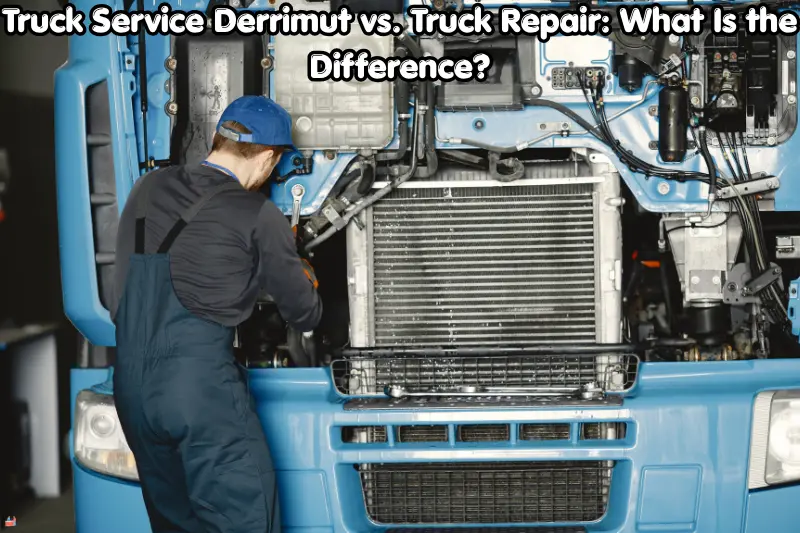
Truck servicing is generally planned maintenance intended to inspect, maintain, and prevent problems.
Truck repair focuses on correcting an identified fault or damaged component.
For example, replacing fluids and inspecting components during scheduled maintenance is servicing. Replacing a failed alternator, repairing a brake problem, or fixing a damaged suspension component is repair work.
The two services often overlap. A routine inspection may identify a problem that requires immediate repair.
| Truck Servicing | Truck Repairs |
|---|---|
| Usually scheduled | Often triggered by a fault |
| Focuses on maintenance and inspection | Focuses on fixing a specific problem |
| Helps identify developing issues | Restores a faulty system |
| Can reduce unexpected downtime | May require urgent attention |
| Follows manufacturer/service requirements | Depends on the diagnosed problem |
Understanding this difference helps fleet owners plan maintenance while responding quickly when faults occur.
How to Choose a Truck Mechanic in Derrimut
Choosing the right service provider is important because heavy commercial vehicles require appropriate tools, knowledge, and experience.
Before booking a service, consider the following factors.
Check Heavy Vehicle Experience
Ask whether the workshop regularly handles commercial trucks and the type of vehicle you operate.
A technician experienced with heavy vehicles is more likely to understand the practical demands associated with commercial truck maintenance.
Ask About Diagnostics
Modern trucks can contain complex electronic control systems. Diagnostic equipment can help technicians identify faults more efficiently.
However, diagnostic scanning should support proper mechanical inspection rather than replace it.
Confirm the Service Scope
Before authorising work, ask what the service includes.
A clear service scope can help avoid misunderstandings about inspections, replacement parts, labour, diagnostics, and additional repairs.
Request a Clear Explanation
If a component needs replacement, ask what failed, why it needs attention, and what could happen if the problem is ignored.
A professional service provider should be able to explain the issue in practical language.
How Much Does Truck Servicing Cost?
The cost of truck servicing varies significantly depending on the vehicle, service type, parts, labour, fault complexity, and maintenance requirements.
A routine inspection will generally involve different work from a major mechanical repair.
Instead of choosing a provider based only on the cheapest quote, compare what is included.
Consider:
- Labour charges
- Parts and consumables
- Diagnostic fees
- Service scope
- Warranty terms
- Vehicle type and size
- Urgency of the repair
- Availability of replacement parts
A low initial price may not represent the best value if important inspections or required work are excluded.
Mobile Truck Service in Derrimut
Mobile servicing can be useful when a truck cannot conveniently travel to a workshop or when downtime needs to be managed carefully.
Depending on the provider and problem, a mobile truck mechanic may perform inspections, diagnostics, maintenance, or selected repairs at a suitable location.
Mobile service can be particularly useful for commercial operators dealing with a roadside issue, fleet maintenance, or a vehicle located at a depot.
However, not every repair can be completed safely or practically on-site. Major mechanical work may require workshop facilities, specialised equipment, lifting equipment, or additional parts.
Practical Truck Maintenance Tips for Fleet Operators
Good maintenance starts between professional service appointments.
Drivers and fleet managers can build simple inspection habits into daily operations.
Before Driving
Check for obvious leaks, tyre damage, warning lights, unusual noises, and other visible problems.
Drivers should also pay attention to changes in braking, steering, acceleration, or gear shifting.
Keep Service Records
Maintain accurate records of servicing, repairs, inspections, replaced components, and other relevant maintenance work.
Good records make it easier to identify recurring problems and determine when future maintenance is due.
Do Not Ignore Warning Lights
A dashboard warning light should not automatically be treated as a minor issue.
The appropriate response depends on the warning and the vehicle. Consult the owner’s information and obtain professional assistance when necessary.
Monitor Tyre Wear
Uneven wear can provide useful clues about alignment, suspension, inflation, loading, or other issues.
Early inspection can help prevent a small problem from developing into a more expensive one.
Plan Preventive Maintenance
Fleet operators should avoid treating maintenance as something that only happens after a breakdown.
A preventive maintenance schedule can make vehicle availability easier to manage and help identify problems earlier.
Common Truck Servicing Mistakes to Avoid
Some maintenance mistakes can increase costs and downtime.
Ignoring Small Problems
A minor leak, unusual vibration, or warning light can indicate a developing fault.
Ignoring it may allow the underlying problem to become more complicated.
Using the Wrong Parts or Fluids
Different trucks have different specifications. Parts and fluids should be appropriate for the vehicle and comply with manufacturer requirements.
Delaying Scheduled Maintenance
Missing service intervals can make it harder to maintain consistent vehicle condition.
Always use the manufacturer’s recommendations and applicable operating requirements as the primary reference.
Focusing Only on the Engine
A truck is more than its engine.
Brakes, steering, tyres, suspension, electrical systems, cooling systems, transmission, and other components all deserve appropriate attention.
Choosing a Service Provider Only on Price
Price matters, but reliability, experience, service quality, parts quality, communication, and turnaround time can also affect the overall value.
For complete heavy vehicle support, explore our related services including truck repairs Derrimut, mobile truck mechanic Derrimut, and diesel mechanic Derrimut. These services can help truck owners and fleet operators find the right maintenance and repair solution for their vehicles.
Truck operators should also refer to official Australian heavy vehicle guidance when checking safety, maintenance, and regulatory requirements. The National Heavy Vehicle Regulator (NHVR) provides authoritative information and resources for heavy vehicle operators, drivers, and businesses.
Frequently Asked Questions
1. What does truck service Derrimut include?
Truck service Derrimut can include inspections, preventive maintenance, diagnostics, fluid checks, brake inspection, suspension checks, tyre inspection, engine servicing, electrical testing, and other manufacturer-recommended maintenance. The exact work depends on the truck’s model, age, mileage, operating conditions, and maintenance history.
2. How often should a truck be serviced?
Truck servicing intervals vary by manufacturer, model, engine, mileage, operating conditions, and vehicle use. The safest approach is to follow the manufacturer’s maintenance schedule and consider the truck’s workload. Heavy commercial vehicles operating under demanding conditions may also require closer monitoring between scheduled services.
3. Can a truck mechanic service my vehicle on-site?
Some providers offer mobile truck servicing and repairs, allowing technicians to inspect or repair selected problems at a depot, workplace, or suitable roadside location. However, major repairs may require workshop equipment and facilities. Always confirm whether the specific service can safely be completed at your location.
4. What are the signs that a truck needs repairs?
Common warning signs include unusual noises, warning lights, overheating, fluid leaks, steering changes, vibration, poor acceleration, gear-shifting problems, unusual exhaust smoke, brake concerns, and uneven tyre wear. Any significant change in vehicle behaviour should be investigated rather than ignored.
5. How can fleet operators reduce truck downtime?
Fleet operators can reduce avoidable downtime by following preventive maintenance schedules, keeping accurate service records, inspecting vehicles regularly, responding quickly to warning signs, and using qualified heavy vehicle technicians. Planning maintenance around operational schedules can also make repairs easier to manage without unnecessarily disrupting deliveries.
Final Thoughts on Truck Service Derrimut
Reliable truck service Derrimut is an important part of maintaining safe, dependable, and productive commercial vehicles. Regular inspections can identify developing problems, while timely repairs help prevent minor faults from becoming larger mechanical issues.
The best maintenance approach combines manufacturer recommendations, professional inspections, driver observations, accurate service records, and appropriate preventive maintenance.
If your truck is showing unusual symptoms or is due for scheduled maintenance, arrange an appropriate inspection rather than waiting for a breakdown. Choosing a qualified heavy vehicle service provider can help keep your truck operating reliably and support smoother fleet operations.
